
What is bentwood and what makes it special. Bentwood (most commonly found in Thonet furniture and the Viennese style of the late 19th and early 20th centuries) is produced by steam-bending solid beech rods under pressure. The wood fibres do not break during this process, but are reoriented — which is why such pieces are extremely strong, yet at the same time highly sensitive to moisture and sudden mechanical stress.
Diagnosis and preparation for dismantling. Before any work begins, a full visual inspection of the item is carried out. All damage is recorded: cracks running along the grain, delamination, warping of parts, the condition of the paintwork, and the integrity of the joints. The chair is photographed from all sides and at all key points - these photographs constitute essential technical documentation that will need to be referred to during reassembly. All parts are marked in inconspicuous places.
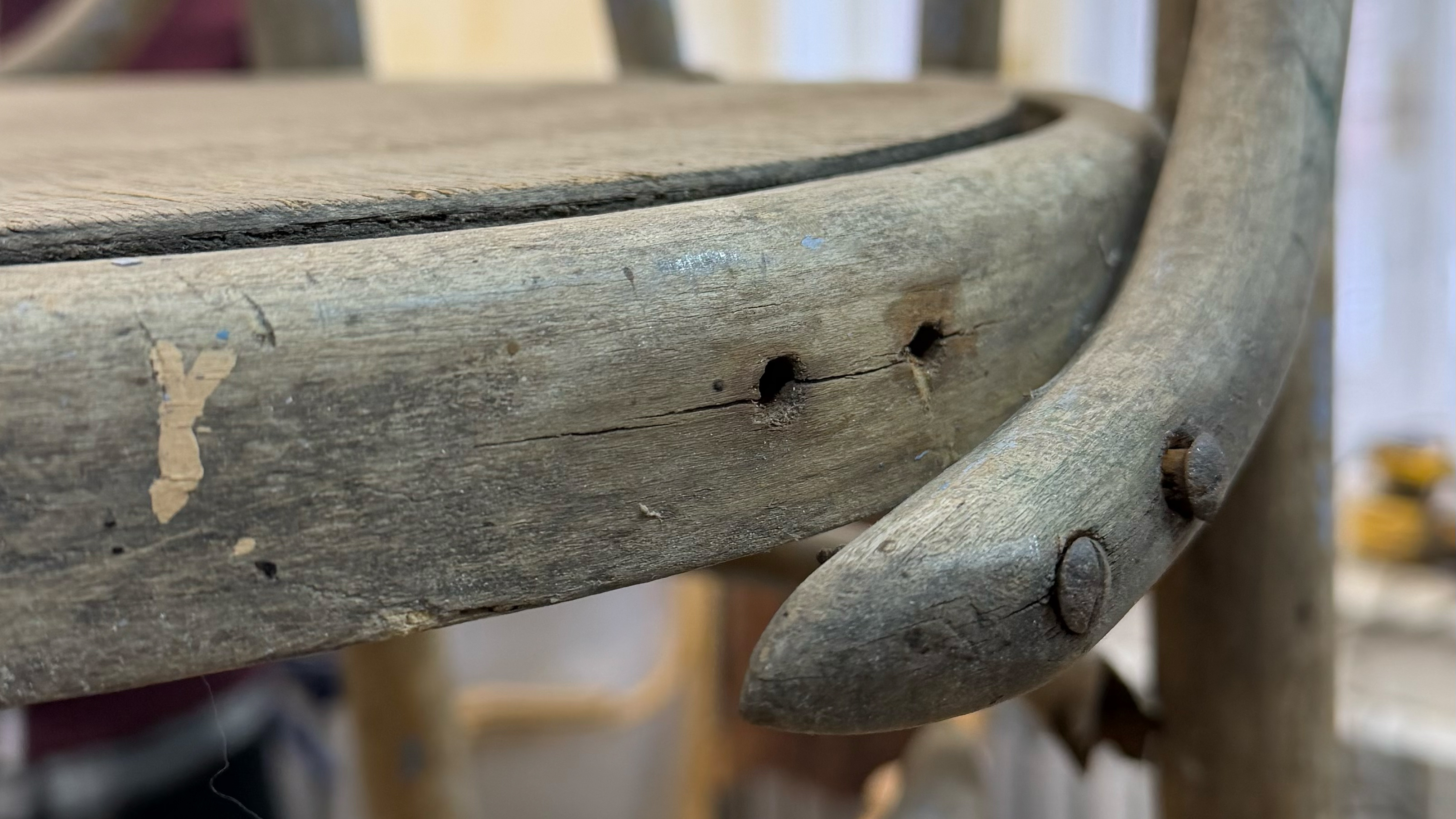
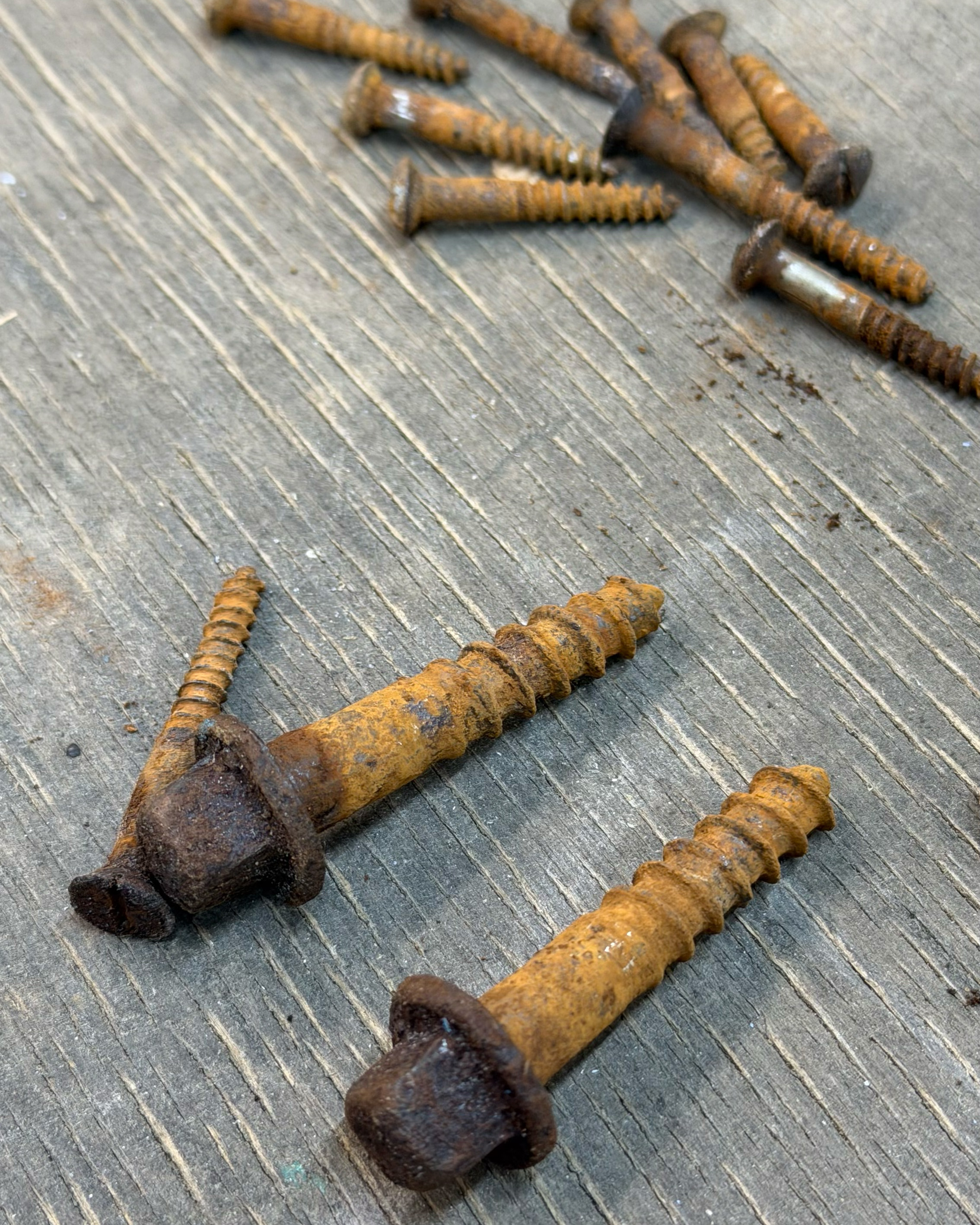
Dismantling. Bentwood furniture of the Thonet type is mainly held together by metal threaded clamps. All removed fittings are stored in a separate container. If the glued joints cannot be separated mechanically, the joint is moistened with a damp cloth for 30–40 minutes to soften the glue. Forcible separation of parts without prior softening is not permitted.
Cleaning. Old upholstery, staples and foam residues are removed completely. The wooden surface is wiped down with a slightly damp cloth. The old paint and varnish coating is removed mechanically using 180–240 grit sandpaper, working strictly along the grain. On carved areas and in recesses, a soft brush is used with a small amount of white spirit applied to a cloth.
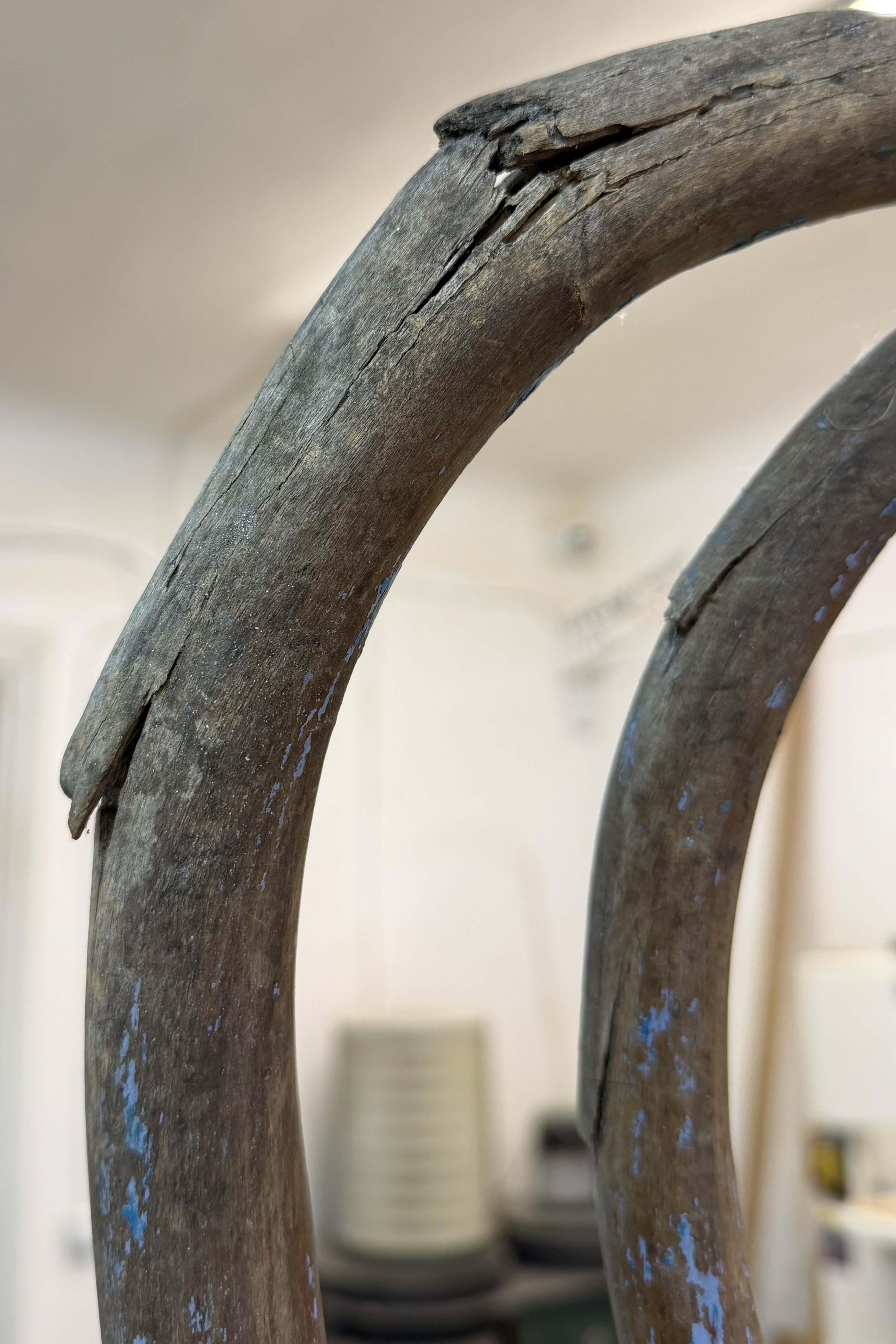
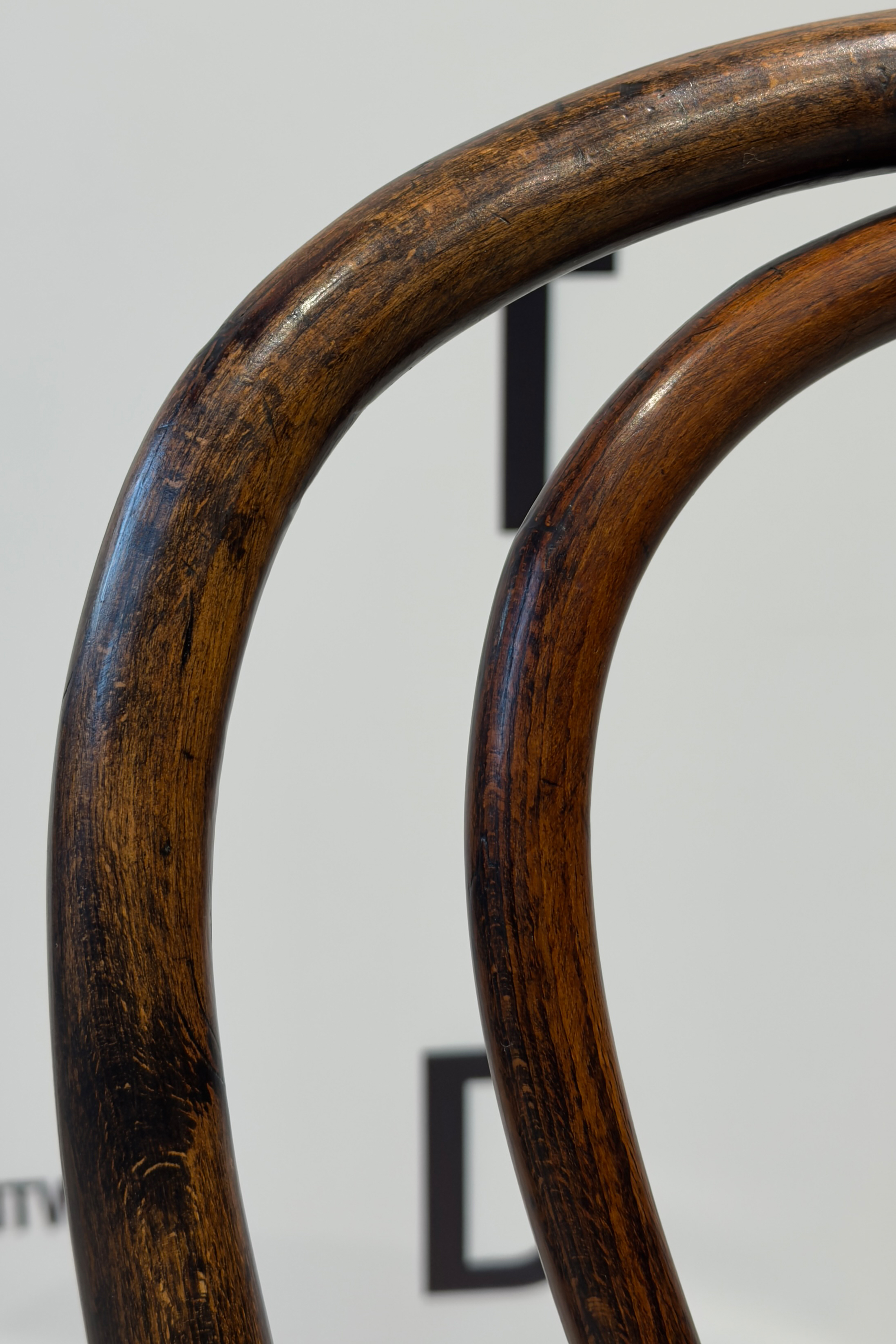
Repairing components. Cracks running along the grain. The crack is opened up using a thin putty knife and cleaned of dust. To fill the crack, use wood glue or epoxy adhesive; for deep cracks, use adhesive mixed with sawdust from the same type of wood to ensure a colour match. The part is clamped along the crack and left under pressure for at least 24 hours.
Replacement inserts. If a section of the piece needs replacing, only beech with an identical grain direction is used. The use of any other timber species or inserts with a cross-grain is unacceptable — this creates a stress concentration point.
Loose joints. The joint surfaces are cleaned of old adhesive residue using a scalpel and fine sandpaper, after which fresh wood glue is applied; the joint is clamped and held in place until completely dry.
Restoring a wicker seat. Before starting work, the new rattan strips are soaked in warm water for 20–30 minutes to make them more pliable. The weaving is carried out in accordance with the original pattern, as shown in the photographs. The ends of the strips are tucked under the frame and secured with glue or small tacks.
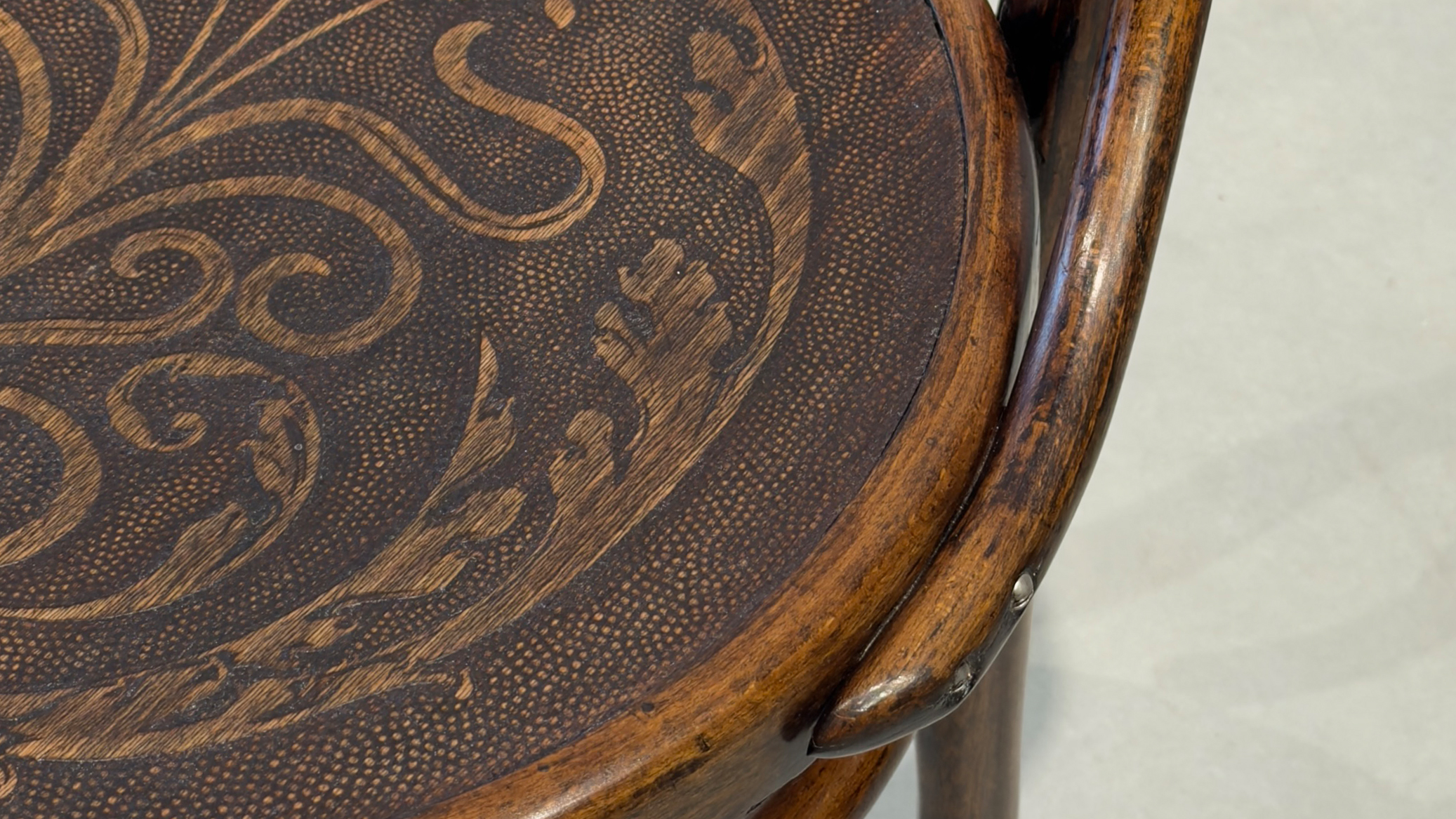
Finishing coat Sanding is carried out in stages: 180 → 220 → 320 grit, strictly along the grain. After each pass, dust is removed with a dry cloth or compressed air. If toning is required, a wood stain or toning oil is applied. The first coat of varnish or oil is diluted by 10–15% — it acts as a primer. Once dry, sand with 320-grit sandpaper, then apply 2–3 finishing coats with intermediate sanding between them.
Recommended finishes: shellac, hard wax compound, water-based furniture varnish, natural linseed or tung oil.
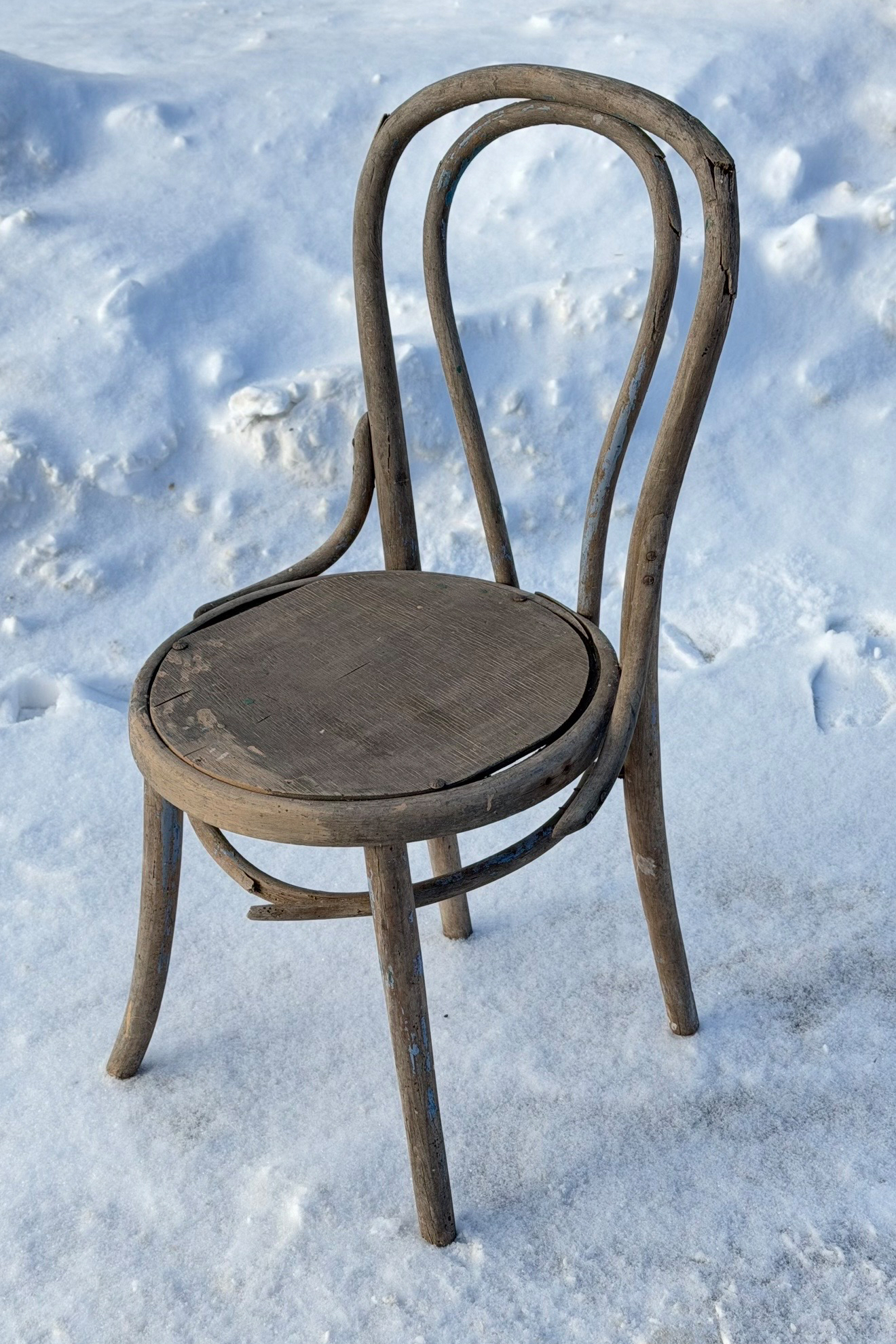
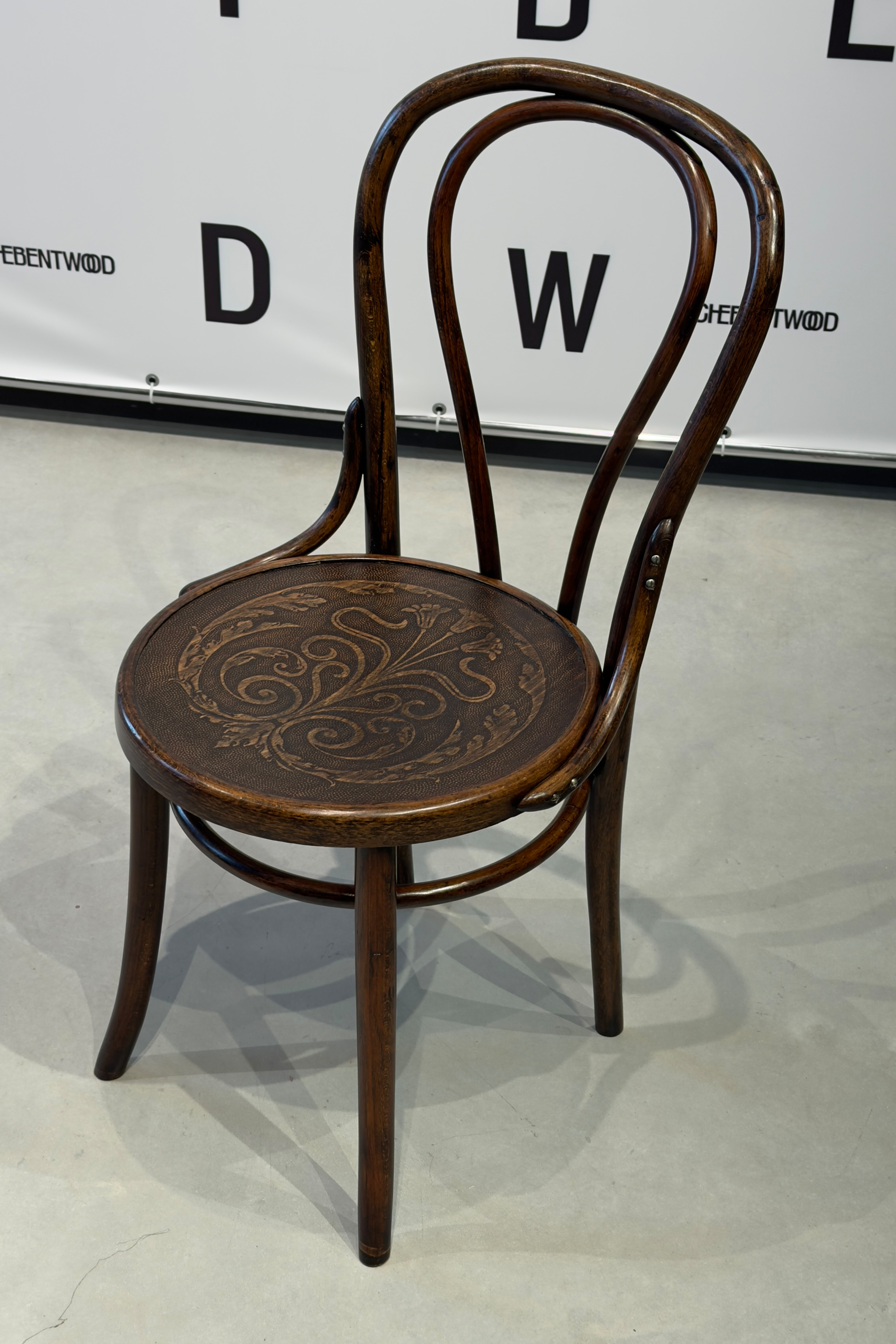
What is strictly prohibited. Prolonged exposure to moisture or soaking of components. Bent elements retain the internal stresses formed during the steam-bending process. Excess moisture triggers reverse deformation — the component changes shape irreversibly.
Forced mechanical bending or straightening. During the manufacture of the component, the fibres were gradually reoriented under the action of steam. A sudden force without thermal preparation leads to the splitting of the wood.
Heating with a construction hair dryer or an open flame. Uneven localised heating causes internal stresses and cracks along the entire length of the component.
Sanding across the grain or using an angle grinder. This destroys the surface-oriented layer of wood and leaves permanent scratches.
Use of polyester car body fillers. The material lacks the necessary flexibility — under dynamic loads, it cracks and peels away.
Replacing metal ties with adhesive joints at load-bearing points. Ties compensate for cyclic loads during use. Adhesive at such points cannot withstand the stress and fails.
Applying thick layers of paint or varnish. This masks the surface’s natural micro-flexibility — the coating cracks during use.

Please fill out the form and upload photos of your furniture. We will assess the scope of work and get back to you to discuss the details and pricing.
